The Power of Sound.
What we hear slips past our defences and goes straight to how we feel.
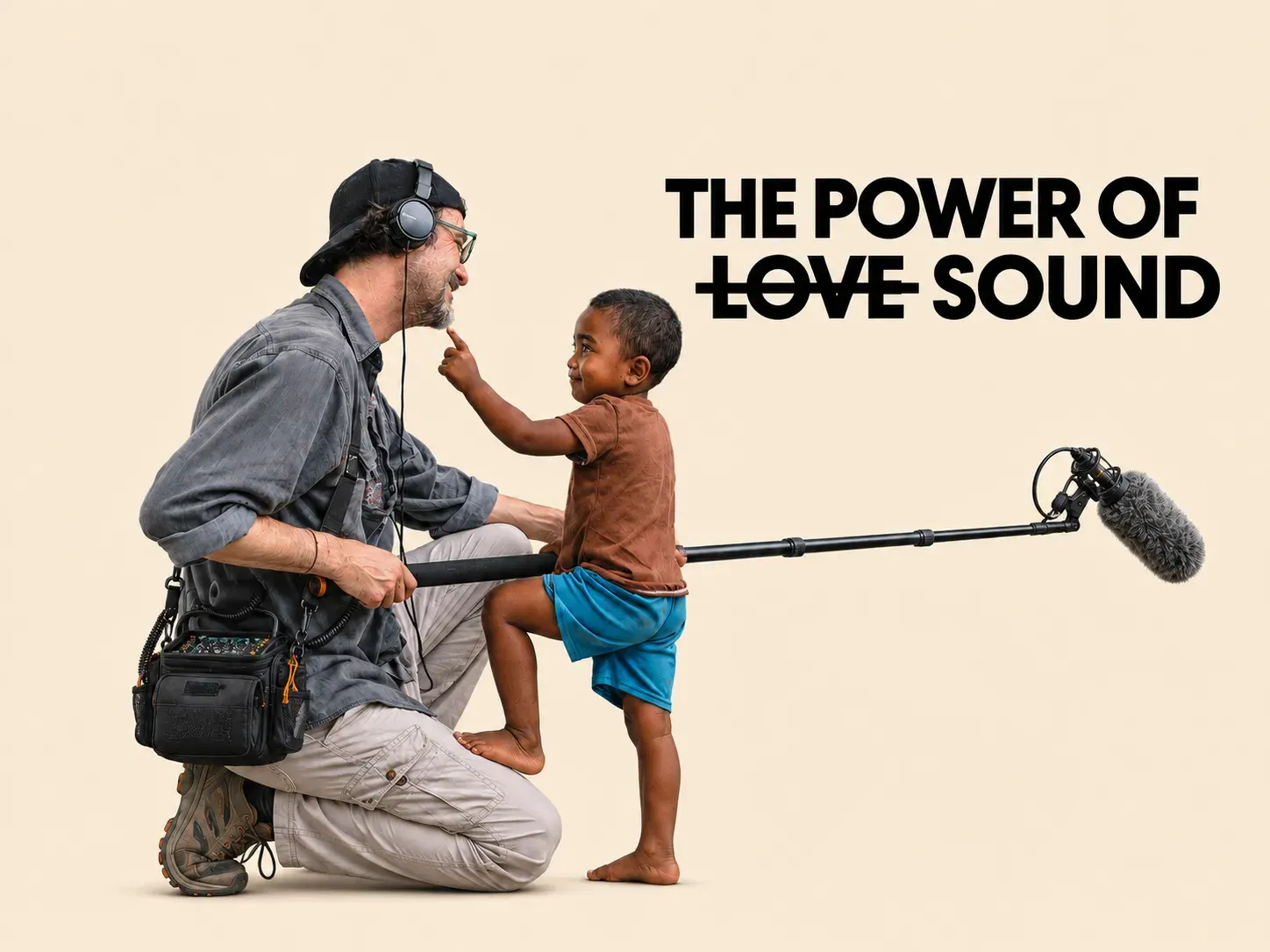
If music can change your mood, or a sound has ever stopped you in your tracks (The Jaws theme anyone?) you already know how much sound matters. You just might not notice it doing its job on screen.
Years ago I was watching a Michael Moore documentary, when he said something that stayed with me: an audience will forgive a slightly blurry picture, but if they can't hear what's going on, they switch off.
I agreed with him straight away, and I still do. Think of a conversation where you can't quite catch what the other person is saying. It's tiring and eventually maddening. Film is no different.
George Lucas called sound "50 percent of the moviegoing experience". Danny Boyle said: "For me, 70-80 percent of a movie is sound. You don't realize it because you can't see it." And Walter Murch, the editor and sound designer behind Apocalypse Now, has long argued that sound's power comes from that invisibility. We scrutinise what we see, but what we hear slips past our defences and goes straight to how we feel.
We’re surprisingly tolerant of imperfect pictures, but bad sound makes us work harder. If we’re straining to understand dialogue, frustration sets in incredibly quickly.
Visuals and pictures matter enormously, and I'll write about them another time. Here I want to talk about the half of filmmaking that's so easy to overlook.
When I think about sound, I think of three things:
1.Dialogue: clean, clear, crisp
The first is the obvious one, and it isn't negotiable. Dialogue has to be clean, clear, crisp and audible. No peaking, no muffling, and levels balanced across the whole film so that nothing jars.
It sounds basic, but it's where films lose people. When a picture is a little soft or shaky, our brains quietly fill in the gaps. When a voice is muffled there's nothing to fill in, so we work hard to decode every word, and frustration sets in fast.
In most films, and certainly in documentary, the story and the emotion travel through what people say. Lose the words and you've lost the plot. Bad audio is also physically unpleasant: harsh, distorted sound grates in a way a soft image never does.
2.Soundscape: the sounds that aren't the story, but are
My second point is the soundscape: every sound that isn't dialogue. Strictly speaking, these sounds aren't the story. But they are, because what a person on screen hears changes what the viewer feels. They give a scene depth.
Seeing a bird flap its wings is one thing. Seeing it and hearing the beat of its wings brings it to life, in more than one sense.
A film is a sensory experience, so the small sounds you leave in, and the moments you leave empty, should all be deliberate. In French I'd say exprès: done on purpose. It's a real curation of sound. A moment with no dialogue, where you sit with one sound or with nothing at all, can say more than any line.
I know this from my own life. The sound of cicadas takes me straight back to childhood in Corsica. The sea calms me down. Birdsong reminds me of the living world around me. And silence can be daunting, but it makes me look inwards. If sounds can do that in real life, imagine what they can do in a film. Even the simplest noise can carry layers of meaning shaped by memory, environment, and social context.
People who experience congruent, well-designed soundscapes linger longer, report higher satisfaction, and are more likely to form durable, shareable memories.
3.Music: the feeling, multiplied
Music, and I could talk about it all day. It's full of joy and sadness, full of feeling, full of an artist's passion and talent, and the range of styles is enormous.
We've been making it for a very long time. The oldest instruments ever found are flutes carved from bird bone and mammoth ivory, discovered in Germany around 40,000 years ago. People were almost certainly singing, clapping and dancing long before that; the evidence just doesn't survive in fossils.
I think we've kept at it because music connects us. It brings community and it brings solace. It lets us meditate and reflect, snap out of a bad mood, cry, laugh, move and play. It answers so many human needs.
So when I add music to a film, it gets just as much thought. The right song can move someone on its own, with no story, no context and no pictures. Put the right song with the right pictures and the feeling multiplies. A really good track can even carry simple visuals and turn them into something else entirely. That's why music sits near the top of my list.
Understanding how sound binds to emotion and memory opens a direct route to shaping powerful, lasting experiences…
finding the right music
For most projects I turn to Audio Network. The Library is enormous (300,000+ tracks) and it's AI search finds similar tracks to ones you already know and love, and brilliant artists are putting out new music all the time.
We've also started using ElevenLabs for sound effects and bespoke tracks. Its effects library is huge, and it can make music to exact timings. Say you're cutting a 60-second social piece and need the music to build, then drop at exactly 12 seconds when the dialogue has a moment to breathe. It's brilliant for that.
AI may well become a go-to for filmmakers. For now I still love working with real artists, because there's passion and talent in their work that you can't reproduce unless you're a music producer yourself. Used in a considered way, to make something very specific you wouldn't otherwise have the budget for, AI can be extremely useful. But that's another blog.
Thank your soundie
Which brings me to the people. If you have the budget, a sound recordist on your shoot is a must-have. A good one doesn't just chase dialogue; they capture the atmosphere of a place, the texture that later gives your film its feeling. They're invaluable, and we should all be grateful for a good soundie (anyone else noticed Soundies always seem to be pensive, thoughtful and quiet - calmly observing the cacophony of chaos around them that us mortals don't hush enough to hear!?).
Sound is the part of a film you can't see, which is exactly why it works so well. We should all be more mindful of how we use it.
Next time you watch something, close your eyes for a minute and just listen.
Sources
• Oldest instruments: National Geographic; phys.org on the 42,000–43,000-year dating
• Danny Boyle: Post Magazine, 2013
• George Lucas: Sound Studies blog
• Michael Moore's approach to documentary: Open Culture